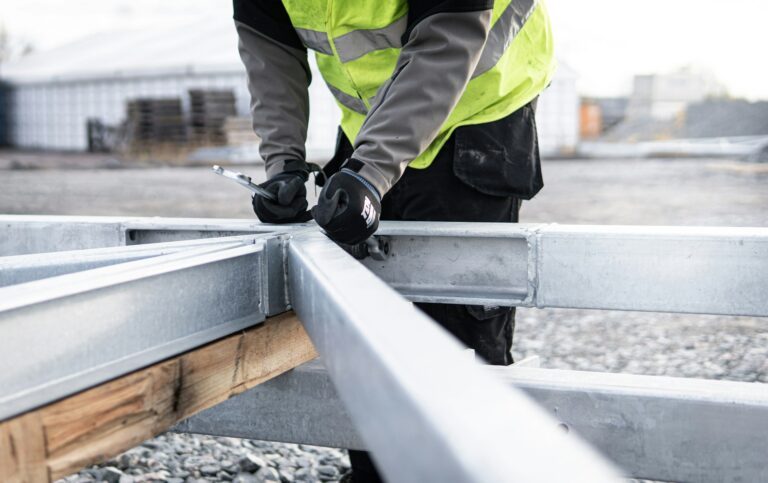
Steel Framing for Houses That Rebuild Faster After Tornado Season

Steel Framing for Houses That Rebuild Faster After Tornado Season

Steel Framing for Houses That Rebuild Faster After Tornado Season 1920 1207 Symmtrex

Spring tornado season across North Texas runs March through June, and the rebuilding push starts when the storm survey maps do. 

Contractors pricing single-family replacement jobs in June and July know what comes next: lumber demand spikes, prices follow, and wood framing that looked straight on delivery day starts warping before the drywall crew shows up. 

Steel framing for houses cuts both risks at the root. Cold-formed steel (CFS) components arrive from the fabrication facility built to tight tolerances, dimensionally stable under Texas heat and humidity, and unaffected by the market swings that make lumber budgets hard to hold.

That’s where panelized CFS comes in. From a Multi-Trades Building Center in Bonham, TX, the fabrication shop builds panelized light-gauge steel framing packages off-site, using BIM-driven design and automated roll-forming equipment. 

Components arrive at the jobsite labeled, sequenced, and ready for fast assembly. No scrambling with field cuts or last-minute lumber swaps.

This article focuses on what steel framing delivers for single-family and small residential projects, including post-storm rebuilds in North Texas. 

Multifamily, commercial, and institutional projects use the same CFS system, and many of the specs translate directly. But the schedule pressure, budget exposure, and wind load realities of single-family work in the south-central US make a compelling case on their own. Let’s dig into specs, the framing comparison, and what to review before you price the package.

Why Stick Framing Keeps Slowing the Job Down

Stick framing loses time in three big ways: material inconsistency, drawing drift after delivery, and unpredictable labor demand at the framing stage. Each one makes the others worse, and that’s how schedules unravel.

When Material Variability Turns Into Field Fixes

Lumber shows up with a moisture content that never stays put. Wood shrinks as it dries, warps under load, and twists when exposed to heat and humidity. In Texas, where summer humidity often hits 70 percent or more, this process just speeds up. A stud that’s straight on delivery day might not be by rough-in.

The field solution? Sistering, shimming, or pulling and replacing members before drywall. Those fixes eat up framer hours that never made it into the original bid. They also push the drywall crew’s start, which delays every other trade. The cold-formed steel framing advantages over wood really stand out in climates with constant heat and humidity.

The durability gap is real. CFS doesn’t absorb moisture. It doesn’t shrink, swell, or lose shape between delivery and install. What’s straight at fabrication stays straight on the job.

Why Drawings Break Down After Delivery Day

Stick framing is all about field cutting. Framers interpret drawings on-site, cut members, and build. That leaves room for interpretation, especially at headers, window returns, and oddball openings. One framer might read the drawing differently than the next, and suddenly the wall is 3/8 inch off layout.

That error might not show up until MEP rough-in or window install. By then, fixing it gets expensive and disruptive. Panelized framing cuts out most of that guesswork because components are cut to the engineering drawing at the fabrication shop, not in the field.

How Labor Gaps Show Up in Framing Schedules

Residential framing faces some of the worst labor shortages in Texas and the south-central US. Getting a full stick-framing crew for a multi-unit project often means waiting, splitting work across smaller teams, or just slogging through slower productivity. Either way, framing takes longer.

Panelized CFS systems make do with smaller crews because most of the complexity is handled before anything hits the jobsite. Fewer on-site decisions mean less experienced workers can do more assembly without driving up error rates. The labor and material cost impact of off-site fabrication becomes obvious at this point in the schedule.

Once you see why stick framing creates these gaps, it’s natural to wonder what actually lands on your site with a prefabricated steel package.

What Actually Shows Up in a Panelized Framing Package

A panelized framing package for a residential build is a lot more than loose studs. Panels, trusses, floor joists, and specialty assemblies arrive ready for install, not just raw material.

Prefabricated Wall Panels, Studs, and Track Cut to the Drawing

Wall panels are the backbone. Each panel gets built to the engineering drawing’s specs, with studs and track assembled, punched for MEP runs, and labeled for sequencing. Stud sizes for residential and light commercial jobs usually run 3-5/8 inch and 6 inch web widths, with gauge depending on load needs.

For loadbearing cold-formed steel studs, 20 gauge (Ga.) and heavier (16 Ga., 18 Ga.) handle structural loads. Non-loadbearing partitions often use lighter gauge. Here’s a quick table showing standard gauge and stud width options for residential framing:

Stud WidthCommon GaugesTypical Application
3-5/8 inch20 Ga., 18 Ga.Interior walls, non-loadbearing
6 inch20 Ga., 18 Ga., 16 Ga.Exterior loadbearing walls
6 inch16 Ga.High-wind and multi-story loadbearing


Panels can come sheathed with zip board if the specs call for it. Fully enclosed panels are usually held back for inspector access, but partially enclosed and insulation-ready panels are available in some places.

Roof Trusses, Floor Joists, and Other Structural Components

Beyond wall panels, a full package includes gable roof trusses, floor trusses, roof joists, and floor joists, all made to the engineered drawing. Open-web truss designs let MEP trades run through the structure without cutting or notching, which sidesteps a common headache in stick-framed homes.

Floor joists in a CFS system don’t shrink or settle after install. That’s huge for multi-story builds where floor-to-floor heights have to stay consistent for stairs, window rough openings, and finish work. The predictability is baked in.

Bathroom Pods and Other Repeatable Assemblies

For multifamily and hospitality jobs, bathroom pods are a real schedule-saver. A bathroom pod is a fully built volumetric assembly that arrives ready to be set and hooked up. Projects with repetitive unit layouts, like apartments and senior living communities, get the most out of this, since the same pod design ships for every unit.

Fabrication happens off-site in a climate-controlled facility, so weather delays and jobsite congestion don’t slow down the most labor-intensive finish assemblies.

How Off-Site Fabrication Cuts Labor Hours and Rework

Off-site fabrication slashes on-site labor hours by shifting decision-making, cutting, and assembly into a controlled environment. Mistakes get caught before the truck even loads up. That difference is measurable.

BIM Coordination Before the Crew Hits the Site

BIM-driven design resolves conflicts before fabrication starts. Using Autodesk Revit, the design team runs clash detection across structural, MEP, and architectural models. If a floor truss and a plumbing run cross paths, that gets fixed in the model, not during rough-in.

The ICC/MBI standards for off-site construction call out coordinated manufacturing with integrated planning as the line between true off-site construction and basic prefabrication. BIM coordination creates a precise bill of materials and a sequenced assembly plan for the field crew to follow.

Exact-Length Parts, Labels, and Sequencing That Speed Assembly

Every component from the Bonham, TX building center is punched, dimpled, and cut to exact length by automated Howick roll-forming equipment. Each piece gets a unique ink label for its spot in the sequence. The crew on-site doesn’t have to measure, mark, or cut.

That pre-labeling wipes out a bunch of common field mistakes:

  • No misread tape measurements
  • No miscut headers or cripples
  • No swapped stud lengths between similar openings
  • No missing members discovered at rough-in

The framing phase usually runs in days, not weeks, on most residential projects. For a closer look at what the off-site fabrication process delivers on a residential job, the workflow covers design through delivery in a single coordinated process.

Why Cold-Formed Steel Stays True When Wood Does Not

CFS doesn’t warp, twist, or change size after fabrication. Its dimensional stability is just part of the material, not a quality control gamble. A 6-inch 18 Ga. stud made in January performs the same way in August, even when Texas is at its hottest and most humid.

That stability makes labor reductions from panelization repeatable. Wood framing brings variability at every stage: delivery, storage, installation. CFS takes that out of the equation before the panel even ships.

Where the System Pays Off First

The payoff from prefabricated steel framing isn’t the same for every job. It really shines where repetition is high, schedules are tight, or site conditions make stick framing especially risky.

Multifamily Projects With Repetitive Unit Layouts

Multifamily jobs with repeating floor plans see the clearest return. Once the engineering is dialed in and the first unit’s framing package is validated, every other unit ships from the same drawings. 

Fabrication time drops per unit, delivery sequencing gets tighter, and the on-site crew picks up speed because the assembly’s always the same.

Townhome developments, apartment buildings, and senior living communities fit this mold. Projects up to six stories can use CFS alone, based on its load-bearing capacity. Taller buildings can use CFS for non-load-bearing walls and fill-up panels integrated with other systems.

ADUs, Single-Family Homes, and Small Footprint Builds

Accessory Dwelling Units (ADUs) and single-family builds benefit from steel framing for houses in a different way. The main driver is schedule compression and fewer callbacks. Small footprint builds might not have multifamily’s repetition, but they face the same risk of warranty issues from warping, settling, and moisture.

Post-tornado rebuilds in North Texas add another factor: speed. Insurance timelines and contractor backlogs compress fast after a storm event. A panelized CFS package can cut framing time significantly compared to stick framing because the components are ready before the crew arrives on site. 

CFS residential framing for single-family homes also simplifies inspections. Components are made to engineered tolerances, so the framing matches the drawings without field deviations.

Light Commercial and Drywall Framing Conditions

Strip centers, quick-service restaurants, and tech flex spaces often use steel framing for interior partitions and exterior walls. Drywall framing here uses the same CFS stud and track system as residential, with limiting heights and deflection criteria set by the project’s load needs.

The SFIA Technical Guide for cold-formed steel framing products lists allowable wall heights, combined axial and lateral load tables, and deflection criteria that engineers use to specify these systems to the 2024 International Building Code (IBC). Non-loadbearing interior partitions typically use 20 Ga. or lighter, depending on height and deflection requirements.

Steel Framing for Houses vs Wood: Where the Schedule and Spec Gap Gets Real

The real spec gap between steel and wood framing isn’t obvious when you’re just looking at line-item costs. It shows up in callbacks, rework, and schedule slips, stuff that never makes it onto the original bid sheet.

Dimensional Stability and Why Straight Walls Matter

Cold-formed steel (CFS) studs keep their shape from the shop to the site and for the building’s whole life. Wood studs? They can wander off by a quarter to three-eighths of an inch, depending on moisture and mill tolerances. Doesn’t sound like much, but it adds up across a wall run.

If a wall isn’t plumb, every trade that follows gets hit: tile guys, cabinet folks, trim carpenters. They’re all stuck dealing with the error. Straight steel-framed walls aren’t just about looks. They actually save every follow-on trade time on site.

Texas Humidity, Hungry Termites, and the Case for Steel

Texas humidity is no joke. Wood framing just doesn’t hold up as well here as in drier climates. Mold, termites, and framing movement from moisture are all real risks for callbacks and warranty headaches. Steel cuts out all three.

It doesn’t support mold, attract termites or rodents, or soak up moisture. That changes the risk equation for residential builds, especially in East Texas, along the Gulf Coast, or anywhere between Dallas and Houston. Wind, fire, and seismic resistance are baked into the system from the start.

Design Flexibility Without Losing Cost Control

CFS handles longer spans than wood at the same gauge. Open-web trusses mean you get wide-open floor plans without heavy beams or posts getting in the way. That flexibility supports modern layouts but doesn’t drag in custom fab costs.

Sure, the upfront price for CFS might run higher than basic lumber if you just compare one line to another. But the total installed cost advantage of steel framing systems becomes clear once you factor in faster installs, fewer callbacks, and a smoother path to occupancy. If you’re running multiple jobs, that schedule predictability really adds up.

Before you price out a framing package, it’s worth digging into a few technical and logistics details.

What to Review Before You Price the Framing Package

Getting an accurate CFS framing package price means nailing down gauge, engineering, and delivery details before sending out a quote. Miss one, and the number’s basically just a guess.

Engineering Scope, Gauges, and Loadbearing Requirements

First up: Are these walls loadbearing or not? That answer drives gauge selection. Loadbearing exterior walls in a single-family home usually call for 18 or 16-gauge, 6-inch studs. Interior non-loadbearing partitions might use 20-gauge at 3-5/8 inches, depending on wall height and deflection limits.

CFS studs need to handle dead, live, wind, snow, and seismic loads, depending on your local code. In Texas, wind load is usually the big one. Engineering drawings have to match jurisdictional requirements, and the framing package gets built to those exact specs, not some generic chart.

Here’s a quick look at what drives gauge and section choices:

Load TypeTypical DriverGauge Impact
Dead loadFloor and roof assembly weight18–16 Ga. for exterior
Live loadOccupancy and useProject-specific
Wind loadTexas wind speed zones18–16 Ga. for high-wind areas
SeismicLow in most of TXMinor impact in most markets


Delivery Planning, Site Access, and Installation Sequencing

Panelized framing ships on flatbeds. Make sure an 18-wheeler can actually reach your site before you lock in the fabrication schedule. Tight infill lots, narrow drives, or low wires might mean you need smaller loads or a crane, which can shift your timeline.

From Bonham, TX, delivery covers a 500-mile radius out of Dallas. Think Kansas City to Laredo, Amarillo to New Orleans. 

Lead times depend on project scope, but fabrication starts as soon as engineering drawings are greenlit. Get the fabricator involved early if you want to snag a delivery window that lines up with your framing phase.

What a Faster Path to Occupancy Really Depends On

If you want to hit your occupancy date, don’t wait until the crew shows up to make key decisions. Biggest delays? Late design changes, missing MEP coordination before fabrication, or site prep that isn’t ready when panels roll in.

BIM coordination sorts out most of those headaches before fabrication kicks off. The digital model catches clashes, checks openings, and locks in your bill of materials, so you’re not scrambling when delivery day hits. That’s how you get framing done in days, not weeks, and actually repeat the process on future jobs. Check out the Managing Project Costs and Budgets.

Frequently Asked Questions

Cut Schedule Slips: How Fast Can Panelized Framing Install Compared to Stick-Built?

Panelized CFS framing usually goes up in days, not weeks, for single-family or small multifamily jobs. Wall panels, trusses, and floor joists show up labeled and sequenced, so crews spend their time assembling, not measuring or fixing surprises. Actual install speed varies with job size and crew, but the time savings over stick framing are pretty consistent.

Control Budget Early: What Drives Installed Cost for Cold-Formed Steel Framing on Mid-Rise and Multifamily Jobs?

Biggest cost drivers? Gauge selection, total linear feet of load-bearing wall, and how complex your truss spans are. On multifamily jobs, repeating the same unit design cuts per-unit fabrication cost because you’re shipping the same drawings over and over. The real installed cost advantage shows up when you count reduced labor and fewer callbacks, not just raw material prices.

Reduce Rework: What Design Details Prevent Framing Clashes at MEP Rough-In and Window Openings?

BIM coordination before fabrication is your best bet. Clash detection in Revit flags problems between structure and MEP runs before you cut any steel. Machine-punched service holes let MEP trades route through walls without field notching, which knocks out a common cause of rework at rough-in.

Cut On-Site Labor: What Level of Shop Fabrication and Pre-Punching Can You Get With Prefabricated Wall Panels?

Panels can arrive fully framed, with punched service holes, sheathed with zip board, and even pre-wired for simple on-site hookups. MEP integration can be handled before panels ship. Rough-in for electrical, plumbing, HVAC, all done in the shop. That kind of prefabrication slashes the number of trade visits you need after panels are set.

Speed Approvals: What Submittals and Engineering Stamps Do You Need for Steel Framing Packages in North Texas?

Most North Texas cities want stamped structural drawings, a bill of materials, and product data sheets listing gauge, section, and load ratings. Certified truss docs are required for roof and floor packages. Submittals should reference AISI S240, the North American Standard for Cold-Formed Steel Structural Framing, and confirm you’re following the right IBC edition for your area.

Avoid Delivery Delays: What Lead Times and Logistics Should You Plan for a 500-Mile Radius From Dallas?

Lead times depend on project details and start when engineering drawings are approved, not when you first ask for a quote. The 500-mile delivery area from Dallas covers most of Texas, Oklahoma, Louisiana, and parts of Kansas and New Mexico. Make sure flatbed access is possible, and schedule delivery to match site prep and foundation work so panels don’t sit around waiting for install.

Make Your Next Framing Decision With Actual Numbers

Steel framing for houses in Texas isn’t just theory. Humidity, heat, labor shortages, and lumber inconsistencies are real problems on every wood-framed job around here. CFS tackles those issues at the core.

If you’re pricing a single-family build, ADU, or post-tornado rebuild and want to see how a panelized CFS framing package stacks up against stick framing, start with your specs and schedule. Get a quote by calling Symmtrex at (469) 842-7794 or submit your project details online. The Bonham, TX team can turn engineered drawings into a delivered, sequenced framing package anywhere within that 500-mile Dallas service area.