

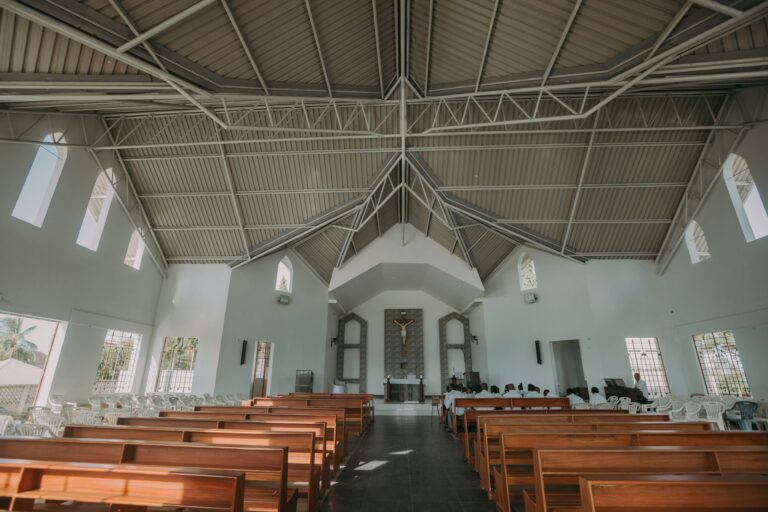
Texas churches, gyms, and community buildings share a structural problem wood framing can’t solve cheaply: wide-open interior spans without interior columns. A sanctuary seating 300 needs 60-foot or longer clear spans at the ridge.
A school gymnasium needs open floor space from wall to wall. Wood truss options exist for these spans, but crowning, warping, and inconsistent moisture content create alignment problems that compound across long runs. Steel roof trusses solve this at the material level.
A prefabricated steel framing system tackles this at the root. Instead of shipping raw material for on-site assembly, every component gets engineered and built in a controlled shop before it ever hits the jobsite. Trusses, panels, and other members arrive labeled, sequenced, and ready to install. No guesswork, no sorting piles.
Let’s walk through how prefabricated cold-formed steel (CFS) roof trusses stack up against stick framing for span precision, schedule control, and installed cost, with real-world detail on profiles, gauges, and delivery logistics for Texas builders.
Why Stick Framing Keeps Slowing the Job Down
Stick framing loses time in three places: material variability, drawing breakdown, and labor gaps. You can count on it. These slowdowns show up on nearly every wood-framed job.
When Material Variability Turns Into Field Fixes
Dimensional lumber comes with a moisture content that changes after delivery. As it dries, it moves. Studs crown, plates cup, and roof framing that looked straight on day one ends up out of plane by the time sheathing starts. That’s not just bad luck. It’s wood doing what wood does.
Cold-formed steel framing doesn’t have a moisture problem. It won’t shrink, crown, or twist after install. Automated roll-forming nails tolerances tighter than anything you’ll get with a saw and tape on site.
Structural steel framing keeps its shape under load and over time. That’s why prefabricated wall panels and trusses show up site-ready. No sorting, no culling, and no built-in field adjustments.
Why Drawings Break Down After Delivery Day
On stick-built jobs, the gap between the drawing and what gets built starts widening the moment lumber hits the ground. Framers make small tweaks for imperfect material, and those tweaks snowball into headaches for MEP trades.
If a door opening is off by half an inch or a wall drifts out of plumb, it rarely gets fixed at framing. It turns into a drywall, trim, or inspection problem. The drawing and the building quietly drift apart.
Engineered CFS framing systems close that gap. Every part gets cut to the drawing, not the field. What you see on paper is what you get in the building. MEP subs and inspectors can actually trust the layout.
How Labor Gaps Show Up in Framing Schedules
Skilled framing labor is tough to schedule consistently. When a crew is smaller than planned, the schedule drags. If material isn’t ready to go, that crew waits. The clock’s still ticking.
Panelized steel framing skips the on-site cutting, measuring, and sorting. Panels show up ready to stand, shrinking the framing window from weeks to days on most residential and light commercial projects. Fewer hours on site means less weather risk, fewer trade conflicts, and better control over labor cost.
Knowing what delays framing is useful. But what’s actually in a panelized package is where the scheduling advantage gets real.
What Actually Shows Up in a Panelized Framing Package
A panelized framing package isn’t just a pile of steel parts. It’s a sequenced set of engineered assemblies, each built for a specific design.
Prefabricated Wall Panels, Studs, and Track Cut to the Drawing
Wall panels arrive with studs and track already assembled. Service holes on vertical studs are punched to consistent sizes, so electrical and MEP rough-in won’t need field drilling. Panels can be pre-wired or set up for plumbing and HVAC before delivery.
Stud sizes usually run 3-5/8 inch and 6 inch web widths in 16, 18, and 20 gauge. Loadbearing jobs use 20 gauge and up; lighter gauges handle non-loadbearing partitions without adding weight. The prefabricated wall panel specs that matter most before ordering: web width, flange depth, gauge, and whether the panel takes structural load.
| Stud Width | Common Gauges | Typical Application |
|---|---|---|
| 1-5/8 in | 25, 20 | Non-loadbearing partitions |
| 3-5/8 in | 20, 18, 16 | Loadbearing interior, light exterior |
| 6 in | 20, 18, 16 | Loadbearing exterior, tall walls |
Roof Trusses, Floor Joists, and Other Structural Components
Steel roof trusses get fabricated to engineered drawings: span, pitch, profile, and load all dialed in. Typical residential and light commercial spans run 20 to 60 feet, with Fink, scissor, and mono-slope profiles each serving their own needs.
- Fink truss: Most common for homes; good for spans up to about 40 feet; internal web pattern moves load to bearing walls efficiently
- Scissor truss: Raises the ceiling line, great for vaulted ceilings in churches, sanctuaries, and townhomes; spans of 40 to 80 feet make this the standard choice for worship spaces and gymnasiums
- Mono-slope truss: Single-pitch, used for sheds, additions, and commercial spaces
Floor trusses and joists follow the same logic. Span tables for cold-formed steel floor and roof joist spans are set by the SFIA technical guide, referencing AISI S100 limits. Every component leaves the shop labeled for sequence and position, so you’re not losing time sorting on site.
Bathroom Pods and Other Repeatable Assemblies
For multifamily and hospitality projects, bathroom pods are a high-value use of off-site fabrication. A pod arrives fully framed, with MEP penetrations and blocking in place. Installers just tie it into the building’s rough-in points instead of building the whole thing in the field.
Repeatable unit types like hotel rooms and apartment baths get the most from pod-based fabrication since setup cost spreads across identical assemblies. After the first unit is drawn and approved, every pod is a manufacturing run, not a construction debate. That’s a huge schedule win on big projects.
How Off-Site Fabrication Cuts Labor Hours and Rework
Off-site fabrication cuts labor hours in specific, measurable ways. It’s not just a general efficiency pitch. It’s about how parts get made and delivered.
BIM Coordination Before the Crew Hits the Site
Building Information Modeling (BIM) in Autodesk Revit runs clash detection before fabrication. Structural conflicts with MEP, windows, or stairs get sorted out in the model, not on site.
The result? A clean bill of materials with real quantities, clear sequences, and no confusion about what goes where. Estimating from BIM is more reliable than old-school 2D takeoffs, so the budget lines up with the actual order.
When BIM coordination happens first, the field crew installs instead of solving puzzles. That alone can save days on the schedule.
Exact-Length Parts, Labels, and Sequencing That Speed Assembly
Every part produced in the Bonham, TX building center is punched, dimpled, and cut to exact length on Howick roll-forming gear. Each one gets a unique ink label for its spot in the sequence.
That labeling means a framer doesn’t have to interpret the drawing on site. Read the label, find the location, install. It lightens the mental load and nearly wipes out rework from mix-ups.
- Parts are cut to engineered tolerances you just can’t match on site
- Service holes punched at the shop; no field drilling
- Panels ship with window and door openings pre-framed
- Replacement parts can ship quickly from inventory if needed
Why Cold-Formed Steel Stays True When Wood Does Not
CFS framing doesn’t warp, twist, or soak up moisture. After install, the dimensions you built stay put. That’s a structural and schedule advantage. Follow-on trades (sheathing, drywall, cladding) work off a plumb, square, stable base.
Wood framing settles and shifts with humidity. CFS just doesn’t. For projects with tight tolerances like curtain walls, prefab cabinet packages, and tiled surfaces, this stability means fewer callbacks and less finish rework. The labor and material cost impact of off-site fabrication for CFS is most obvious in the lower rework rate for finish trades.
Where the System Pays Off First
The steel framing system pays off fastest on jobs with lots of repetition and where compressing the schedule really matters.
Multifamily Projects With Repetitive Unit Layouts
Apartment and townhome projects with the same or similar floor plans are the clearest win. The BIM model is drawn once, panels get fabricated in runs, and install follows a predictable sequence floor by floor. Labor hours per unit drop with each repeated floor because the crew gets faster at the same assembly.
Cold-formed steel framing systems can go up to six stories with CFS only, and higher with hybrid structures. For three- to five-story multifamily jobs, combining panelized walls, steel roof trusses, and prefab bathroom pods compresses the framing, MEP rough-in, and waterproofing sequence significantly.
Senior living and townhome developments with shared wall conditions also benefit from the consistent acoustic and fire-resistance ratings that tested CFS assemblies provide.
Churches, Gymnasiums, and Long-Span Community Buildings
Worship spaces, school gyms, and community centers need clear-span framing that can cover 40 to 80 feet without interior columns. Steel roof trusses, particularly scissor and parallel-chord profiles, are the standard solution for these spans at the light commercial scale. CFS scissor trusses give churches and sanctuaries the vaulted ceiling line they need without the structural compromise of adding columns to the floor plan.
CFS trusses engineered to AISI S240 deliver predictable load paths for these large spans. The SFIA technical guide’s combined axial and lateral load tables let engineers specify roof systems to the 2024 IBC with confidence. For a community center or multi-purpose facility that also needs to resist Texas wind loads, CFS handles the combination of long span and lateral demand better than most wood alternatives.
ADUs, Single-Family Homes, and Small Footprint Builds
Accessory dwelling units (ADUs) and single-family homes get schedule value from panelized CFS framing even at small scale. A two- or three-bedroom ADU can be framed in days instead of weeks when panels arrive pre-built and sequenced.
Steel framing solutions for residential and ADU builds offer long-term value for owners: no settling time, no moisture damage, no termite or pest issues. For builders in coastal or humid Texas markets, those properties mean fewer warranty callbacks.
Light Commercial and Drywall Framing Conditions
Strip centers, QSR buildouts, and tech flex spaces really lean on CFS framing at the light commercial scale. Non-loadbearing interior partition walls use lighter gauge track and stud. Loadbearing exterior walls use 16 or 18-gauge members engineered to handle wind, snow, and dead loads for the specific jurisdiction.
For drywall framing in commercial tenant improvements, machine-punched service holes and consistent stud spacing speed up layout and remove the need for field drilling during conduit runs.
Steel Roof Truss vs Wood: Where the Span and Spec Gap Gets Real
The spec gap between steel and wood framing isn’t just a matter of taste. You see it in dimensions, moisture behavior, and design flexibility. These are the details that shape both schedule and total cost.
Dimensional Stability and Why Straight Walls Matter
CFS studs come out of the factory with specific web width, flange depth, and lip dimensions, all held tight by automated equipment. Dimensional lumber, on the other hand, gets graded but isn’t dimensionally exact. A 2×6? That’s really 1.5 inches by 5.5 inches, and moisture swings can shift those numbers after delivery.
Steel studs keep their shape. Walls framed with steel stay straighter, plumbing lines up, and sheathing lays flat. That makes a difference for window and door tolerances, cladding systems, and any finish work where a wavy substrate would stand out.
Holding the Asset? Mold and Pests Make Wood a Long-Term Liability
Wood framing can get hit hard by mold if moisture gets trapped during or after construction. In humid spots across Texas and the Gulf Coast, that’s not just a possibility. It leads to warranty headaches and remediation costs years later.
CFS framing doesn’t give mold a foothold. Termites, rodents, and other pests can’t eat it. It won’t rot. That’s not just a small upgrade over wood; it wipes out entire categories of hidden defects. For developers planning to hold a project long-term, that risk reduction affects operating costs and asset value.
The steel vs wood framing comparison for residential and light commercial work shows clear advantages in durability, dimensional control, and long-term performance.
Design Flexibility Without Losing Cost Control
CFS framing isn’t locked into a uniform grid to be efficient. Trusses can vary in profile, span, and pitch within the same building. You can frame openings to exact dimensions. No site mods needed. MEP routing gets integrated at fabrication, not jammed in later.
Design flexibility in CFS doesn’t mean higher cost. It means you solve the design before fabrication, so there are no surprise change orders from field conditions. That predictability is what makes CFS framing cost-effective on complex layouts, not just simple boxes.
What to Review Before You Price the Framing Package
To price a CFS framing package accurately, you’ll need some specific inputs that don’t show up in a lumber takeoff. Getting these right before the RFQ saves time and keeps scope gaps at bay.
Engineering Scope, Gauges, and Loadbearing Requirements
First up: decide if the framing system includes loadbearing elements or just non-loadbearing partitions. Loadbearing studs start at 20 gauge and must be engineered for dead, live, wind, snow, and seismic loads as defined by the project’s jurisdiction and the IBC.
The North American Standard for Cold-Formed Steel Structural Framing (AISI S240) spells out different engineering needs for prescriptive versus fully engineered designs. Most load-bearing residential and light commercial projects need stamped drawings. Confirm your engineering scope before asking for fabrication pricing.
| Load Type | Gauge Minimum | Stud Width Minimum |
|---|---|---|
| Non-loadbearing partition | 25 gauge | 1-5/8 in |
| Loadbearing interior wall | 20 gauge | 3-5/8 in |
| Loadbearing exterior wall | 16-20 gauge | 3-5/8 to 6 in |
| Roof truss chord (residential) | 18-16 gauge | 3-5/8 to 6 in |
Delivery Planning, Site Access, and Installation Sequencing
Panelized framing ships as a sequenced package. Panels and trusses get sized for transport and labeled for install order. You’ll need site access for the delivery truck and a clear spot to unload when it shows up.
Plan your delivery around the foundation and slab schedule. You can’t install panels until connectors are set to the foundation. Once those are ready, wall panels go up, open web trusses follow, and the subfloor gets applied using lightweight concrete or cementitious board. That four-step sequence only moves fast if the site is prepped for it.
Coordinate with your MEP subs before finalizing panel drawings. Pre-punched service holes and pre-wired panels cut field labor, but you have to specify those before fabrication, not after delivery.
What a Faster Path to Occupancy Really Depends On
Getting to occupancy faster isn’t just about quick framing. It takes design getting solved before fabrication, MEP coordination happening at the BIM stage, and the framing package showing up when the site’s ready for it.
If you hit those three marks, framing tasks that usually drag out for weeks on a wood-framed job can wrap up in days. That means earlier access for sheathing, insulation, rough-in, and inspections. Every trade starts sooner, pulling the whole schedule forward toward occupancy.
The general contractor framing timeline resources for CFS panelized systems show that the schedule advantage comes from planning, not just fast delivery.
Frequently Asked Questions
Cut Schedule Slips: How Fast Can Panelized Framing Install Compared to Stick-Built Light-Gauge Steel?
Panelized CFS framing usually shrinks the framing phase from weeks down to a few days on residential and light commercial projects. Components show up pre-assembled and labeled, so crews install instead of cutting, measuring, and sorting. The exact timing depends on building complexity and how ready the site is.
Control Budget Early: What Drives Installed Cost for Cold-Formed Steel Framing on Mid-Rise and Multifamily Jobs?
Installed cost mostly comes down to gauge selection, panel count, truss span complexity, and whether MEP integration is part of fabrication. BIM-based takeoffs give tighter material budgets than 2D estimates, so you don’t need as much contingency. Labor savings from pre-assembled panels can offset higher material costs per linear foot compared to raw lumber on most multifamily jobs.
Reduce Rework: What Design Details Prevent Framing Clashes at MEP Rough-In and Window Openings?
BIM clash detection sorts out structural and MEP conflicts before fabrication. Window and door openings get pre-framed to exact rough-opening sizes, so there’s no field modification. Service holes are machine-punched on consistent centerlines, so conduit and plumbing runs follow the plan, not a workaround for field-cut framing.
Cut On-Site Labor: What Level of Shop Fabrication and Pre-Punching Can You Get With Prefabricated Wall Panels?
Panels arrive with studs and track assembled, service holes punched, and window or door openings framed. Pre-wiring is an option, along with panels prepped for plumbing and HVAC. You set the level of pre-fabrication during design and engineering, not after delivery.
Speed Approvals: What Submittals and Engineering Stamps Do You Need for Steel Framing Packages in North Texas?
Load-bearing CFS jobs need stamped engineering drawings to show compliance with the IBC edition adopted by the local jurisdiction. The SFIA certified truss fabricator designation backs up the submittal package for roof and floor trusses. Check with your local building department for specific submittal requirements before locking in the engineering scope.
Avoid Delivery Delays: What Lead Times and Logistics Should You Plan for a 500-Mile Radius From Dallas?
Lead times hinge on design complexity, engineering review, and current shop schedule. Line up delivery with your foundation and slab completion so materials don’t arrive too early. From Dallas, delivery covers 500 miles in all directions, from Kansas City to Laredo and Amarillo to New Orleans. Have your project specs ready when you reach out for an estimate.
Ready to Frame Your Next Project With a System Built for Speed
Prefabricated CFS framing closes the gap between what’s on the drawings and what actually gets built. If you’re looking at steel roof trusses for a church, gym, or long-span project, the key decisions happen before fabrication: span, profile, gauge, MEP coordination, and delivery timing.
Want a quote on your framing package? Call Symmtrex at (469) 842-7794 or submit your project specs online for a fabrication estimate tailored to your build.