

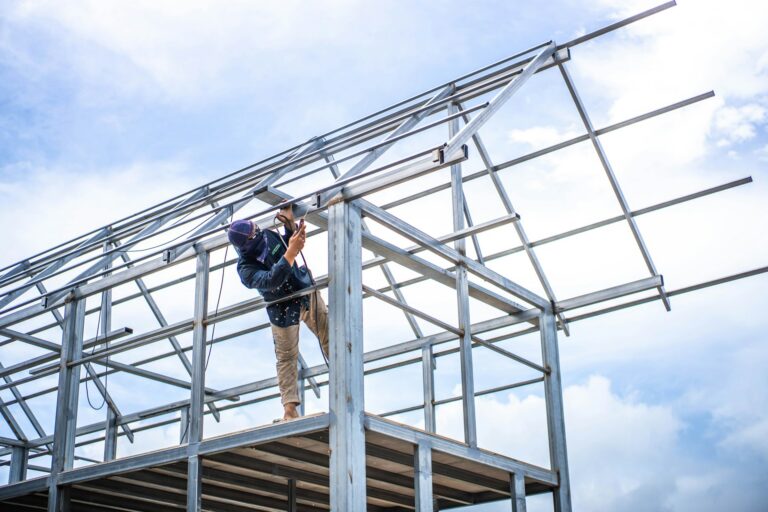
Strip centers and QSR buildouts run on tight shell delivery windows. A lumber delivery that shows up wet or warped doesn’t just delay one space; it backs up the whole trade stack. Cold-formed steel framing closes that gap, but only when components arrive engineered and sized right from the start.
With a prefabricated steel framing system, framing becomes an assembly process, not a jobsite cutting marathon. Components get built off-site to engineered drawings, labeled for install order, and shipped ready for fast assembly. That shift takes most of the field measuring, cutting, and guesswork out of the equation, and that’s usually where commercial framing jobs go sideways.
Below, you’ll find specs, process details, and practical context for panelized cold-formed steel framing, including a comparison with wood framing and a clear breakdown of what to review before pricing your framing package. This system ships from North Texas, making it a solid option for projects across the south-central US.
Why Stick Framing Keeps Slowing the Job Down
Stick framing loses days in all sorts of small ways: lumber that doesn’t measure true, drawings that get “interpreted” in the field, and crews that aren’t always at full strength. One of those, you can deal with. All three at once? That’s a headache.
When Material Variability Turns Into Field Fixes
Wood framing stock is never perfectly consistent. One 2×6 might be a little different from the next: moisture, straightness, even the actual size. Over a whole wall, those little differences add up. Framers end up shimming, trimming, or even redoing sections that should’ve just gone up once.
Cold-formed steel studs, though, come out of the roll-former with tight tolerances. A 6-inch stud is really a 6-inch stud, all the way through the job. That kind of consistency matters on commercial sites where wall systems have to line up with curtain wall, MEP paths, and finishes from multiple trades.
The SFIA Technical Guide for Cold-Formed Steel Framing notes that light-gauge steel members are manufactured to meet specific standards that wood just can’t match consistently. When you fabricate off-site with automated equipment, that consistency covers the entire framing package.
Why Drawings Break Down After Delivery Day
On a stick-framed job, drawings often get “interpreted.” A framer decides on header height or stud spacing based on experience, not always the engineered drawing. That can create headaches later, especially when MEP rough-in doesn’t match the model.
BIM coordination changes that. Clash detection in the model catches conflicts between framing, ductwork, and plumbing before anything gets built. When components arrive pre-cut to match the model, the field and the drawings actually stay in sync.
That alignment keeps your MEP subs on track, too. Follow-on trades can move faster because the framing matches the plans they expected.
How Labor Gaps Show Up in Framing Schedules
Framing crews on commercial jobs rarely stay full-size the whole time. People come and go, and that slows things down. With a panelized system, you don’t need as many highly skilled framers, since components show up labeled and sequenced.
Instead of training everyone to measure and cut from scratch, you just need folks who can read a label, place a panel, and fasten it. That’s a much faster skill to teach. Even a lean crew can keep the schedule moving, even when labor is tight.
What Actually Shows Up in a Panelized Framing Package
A full panelized framing package includes wall panels, structural components, and specialty assemblies, all built to the engineered drawing before they ever leave the shop. Nothing shows up as raw stock waiting for someone to figure it out on site.
Prefabricated Wall Panels, Studs, and Track Cut to the Drawing
Wall panels come pre-assembled. Studs, track, window and door openings: it’s all framed in already. Stud spacing, headers, king studs: all set at the shop, not figured out on site.
Every part has its own ink label, showing exactly where it goes in the sequence. That system replaces the field markups and “just put it over there” instructions that lead to mistakes on traditional jobs. For contractors juggling multiple trades, that level of organization can really cut down on headaches.
Panels can also show up with service holes pre-punched in the vertical studs, so there’s no need to drill for electrical or plumbing rough-in. That shaves off labor hours before MEP even starts. If you want more detail, check out what to know before building with prefabricated wall panels.
Roof Trusses, Floor Joists, and Other Structural Components
Roof trusses and floor joists are built to the same engineered drawings as the wall panels. Structural components show up sized and sequenced to match the wall system, so you don’t run into field conflicts between truss geometry and wall plate height.
Open-web floor trusses let MEP run through the depth, not below it. That’s a real advantage for multi-story projects where every inch of ceiling height counts. Gable roof trusses for commercial jobs follow the same off-site process and show up ready to go, no field cutting.
| Component | Fabrication Method | Jobsite Benefit |
|---|---|---|
| Wall Panels | Roll-formed, assembled off-site | No field sizing; labeled for sequencing |
| Roof Trusses | Engineered, fabricated to drawing | Match wall plate height exactly |
| Floor Joists | Open-web, cut to span | MEP runs through truss depth |
| Roof Joists | Sized per loading specs | No field adjustment required |
Bathroom Pods and Other Repeatable Assemblies
Bathroom pods get prefabricated as complete assemblies and shipped ready for hookup. On hospitality or multifamily projects with lots of repeated layouts, pods cut on-site labor in one of the most complex spaces in the building.
Repeatable assemblies speed up the slowest parts of the job, since you can fabricate one, refine it, and then build a bunch the same way. Inspections get easier, too, since every pod matches the approved assembly.
How Off-Site Fabrication Cuts Labor Hours and Rework
Off-site fabrication moves the heavy framing work into a climate-controlled shop. The result? Faster installs and fewer mistakes to fix later.
BIM Coordination Before the Crew Hits the Site
BIM-driven design spots clashes that would cost real money if you found them in the field. A duct running through a header, a window opening that doesn’t fit the grid, a truss bearing that doesn’t line up. These get fixed in the model before you ever build anything.
That upfront coordination shrinks the project schedule, since the crew isn’t stopping to figure things out. Installation actually moves at the pace the design intended.
The Bonham, TX fabrication facility works from the same project database as the BIM model. When the design’s done, manufacturing starts from the same data, so there’s no disconnect between shop drawings and the design model.
Exact-Length Parts, Labels, and Sequencing That Speed Assembly
Every part leaves the shop cut to length, punched, dimpled, and labeled. No field cutting station. No scrap pile growing by the foundation. The crew grabs a piece, checks the label, and puts it in place.
This process also cuts down on jobsite waste and clutter. A site running panelized framing is noticeably cleaner than one doing stick framing. Fewer offcuts, less mess, and fewer piles mean other trades can get in sooner.
For a closer look at how off-site fabrication impacts total project cost, see cutting construction costs and time with off-site fabrication.
Why Cold-Formed Steel Stays True When Wood Does Not
Cold-formed steel doesn’t warp, twist, shrink, or soak up moisture. A wall that’s plumb on install day stays plumb when the drywall goes up, after move-in, and even through a Texas summer. That stability isn’t luck. It’s just how the material works.
Wood, on the other hand, tends to settle and move over time. That can mean cracked finishes, sticky doors, and call-back work after the building’s occupied. Steel basically takes that whole category of rework off your plate. If you’re managing warranty risk, that’s a big deal.
Where the System Pays Off First
Panelized light gauge steel framing for commercial and residential projects really shines on jobs with repeat layouts, tight timelines, and limited labor on site.
Multifamily Projects With Repeating Unit Layouts
Multifamily buildings with the same floor plan over and over are the sweet spot for panelized framing. You can fabricate the same wall panel at scale, which drops the per-unit cost and speeds up the cycle from floor to floor.
MEP rough-in paths also stay identical across units. When framing shows up with service holes pre-punched, electrical and plumbing crews can work without coordinating every single unit. That consistency shortens the rough-in schedule, especially on buildings with 20+ units.
- Apartments
- Townhomes
- Senior living communities
- Dormitories
- Hotel and motel rooms
ADUs, Single-Family Homes, and Small Footprint Builds
ADUs and single-family homes benefit from panelized steel framing since the framing phase is so short compared to the overall project. When you can finish framing in days instead of weeks, the whole schedule tightens up.
Steel framing for small builds also means less space needed for material. A tight urban lot or backyard ADU doesn’t have room for a big lumber pile. Panelized parts arrive compact and go up fast.
Light Commercial and Drywall Framing Conditions
Strip centers, QSR buildouts, and tech flex spaces use metal stud framing for both structural and non-structural work. Interior partitions, soffits, and drywall conditions all work with light-gauge steel systems.
For non-load-bearing interior walls, 20-gauge studs at 3-5/8-inch width cover most needs. For exterior load-bearing, 16-gauge 6-inch studs handle the structural demands with engineered resistance to dead, live, wind, and seismic loads. Matching the gauge and size to the actual loading is the key call before you price your framing package.
Commercial Metal Stud vs Wood: Where the Schedule and Spec Gap Gets Real
Steel and wood both do the structural job, but they perform differently once you factor in site conditions, schedule pressure, and what happens after move-in.
Dimensional Stability and Why Straight Walls Matter
Steel studs keep their shape from fabrication through installation and finishing. Wood studs just don’t. On commercial jobs where you’re attaching gypsum board, tile, or curtain wall, getting a plumb, straight wall is non-negotiable if you want a decent finish.
When walls drift out of plane after framing, it leads to expensive rework during finishing. Steel takes that headache off the table. For a closer look at how the two systems stack up, check out this breakdown of steel vs wood framing performance in commercial builds.
Moisture, Pests, and Other Sources of Hidden Rework
Wood framing in humid or coastal climates soaks up moisture. That’s an open invitation for mold, pests, and long-term structural issues. Each of these problems can lead to callbacks and warranty claims long after the job’s supposed to be finished.
Cold-formed steel doesn’t care about moisture, mold, termites, rodents, or even fire the way wood does. On commercial jobs with long lifespans, spending a little more up front makes sense when you factor in the hassle and cost of future repairs.
Design Flexibility Without Losing Cost Control
Light-gauge steel framing works for all kinds of commercial buildings and layouts. Stud widths from 3-5/8″ to 6″ and gauges from 20 to 16 cover most needs, structural or not. Open-web trusses can span long distances without extra columns, so you get more usable space without extra structure cost.
BIM coordination means you can tweak the design without blowing up your budget. Changes in the model flow through to fabrication drawings before anything gets made. You get framing that matches the latest design, without surprises on site.
What to Review Before You Price the Framing Package
Trying to price a commercial metal stud framing package without nailing down engineering scope, gauge requirements, and delivery logistics? That’s a recipe for change orders. Sorting these details early helps keep your margin intact.
Engineering Scope, Gauges, and Loadbearing Requirements
The most critical call in a cold-formed steel framing package is picking the right gauge and stud size for each wall. Loadbearing and non-loadbearing walls need different specs, and mixing them up causes code problems and field headaches.
| Application | Stud Width | Gauge | Loadbearing |
|---|---|---|---|
| Interior partition | 3-5/8 inch | 20 Ga. | No |
| Exterior structural wall | 6 inch | 16 Ga. | Yes |
| Structural exterior wall | 6 inch | 18 Ga. | Yes |
| Non-structural exterior | 3-5/8 inch | 20 Ga. | No |
Studs in 20-gauge or thicker can be rated for load-bearing when engineered properly. The AISI S202 Code of Standard Practice for Cold-Formed Steel Structural Framing spells out the design, fabrication, and installation standards for commercial work. Double-checking which walls are structural before you finalize the spec is a must.
Delivery Planning, Site Access, and Installation Sequencing
Panelized framing packages show up on flatbed trailers. You need to make sure the site can actually take a flatbed when the panels arrive. Lock this down before placing your fabrication order, not after.
Sequencing matters, too. Panels are labeled to install in a certain order. If they arrive before the foundation connectors are ready, they just sit around (on the truck or on the ground). Lining up foundation work with the fabrication lead time keeps things moving.
What a Faster Path to Occupancy Really Depends On
Framing speed only matters if the next trades can start right away. A panelized package that goes up in days is valuable because it lets MEP, insulation, and drywall crews get moving faster. That’s where you actually see the schedule compress.
Pre-punched service holes in the studs, panels pre-wired for easy hookup, and panels built with MEP in mind all shave time between framing and rough-in. If you’re managing trade sequencing, it’s worth double-checking these details with the fabricator before shipping.
Frequently Asked Questions
Cut Schedule Slips: How Fast Can Panelized Framing Install Compared to Stick-Built Light-Gauge Steel?
Panelized framing can cut on-site framing time from weeks to just days on many commercial jobs. Since components arrive pre-assembled and labeled, crews just install instead of measuring and cutting. The framing phase moves a lot faster.
Control Budget Early: What Drives Installed Cost for Cold-Formed Steel Framing on Mid-Rise and Multifamily Jobs?
Biggest cost drivers? Gauge selection, stud size, and the ratio of load-bearing to non-load-bearing walls. Getting accurate structural drawings in early lets the fabricator build a precise bill of materials, which means less waste and fewer cost surprises.
Reduce Rework: What Design Details Prevent Framing Clashes at MEP Rough-In and Window Openings?
BIM coordination before fabrication catches conflicts between framing and MEP runs. Window and door openings get framed into the panel at the shop, so you don’t have to make field adjustments that can throw off the architect’s layout.
Cut On-Site Labor: What Level of Shop Fabrication and Pre-Punching Can You Get With Prefabricated Wall Panels?
Panels show up with studs, track, and openings already assembled. All vertical studs have machine-punched service holes for MEP. Panels can even be pre-wired for easy on-site electrical hookup, cutting down labor for both framing and electrical crews.
Speed Approvals: What Submittals and Engineering Stamps Do You Need for Steel Framing Packages in North Texas?
Steel framing packages in North Texas usually need stamped engineering drawings, a bill of materials tied to the structural calcs, and proof the framing meets load requirements for dead, live, wind, and seismic. Certified truss fabrication docs are required for truss parts.
Avoid Delivery Delays: What Lead Times and Logistics Should You Plan for a 500-Mile Radius From Dallas?
Fabrication lead times shift depending on project size and shop workload, so the best way to keep your schedule intact is to confirm your timeline with the fabricator early. Delivery within 500 miles of Dallas covers most of the south-central US, from Kansas City to Laredo and Amarillo to New Orleans, with flatbed shipments coordinated to your foundation schedule.
Make Your Framing Decision With the Right Specs in Hand
Commercial metal stud framing works best when you’ve locked in engineering, gauge selection, and delivery logistics before bidding. Panelized fabrication can compress the framing phase and keep MEP on track, but only if the package is built from up-to-date structural drawings and sequenced for your site.
If your project’s in the scoping or spec phase, the next step is getting an engineered quote based on your actual drawings. Get a quote on your framing package from Symmtrex. Call (469) 842-7794 or submit your project specs online for a fabrication estimate from a certified truss fabricator serving commercial and residential projects within 500 miles of Dallas.