

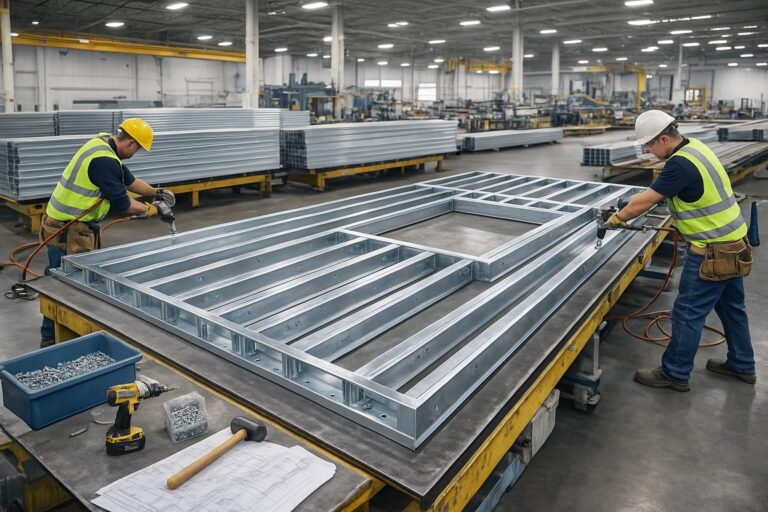
Cold-formed steel framing supports faster builds by improving consistency and reducing variability across projects. When cold-formed steel framing replaces less predictable systems, teams gain better control over layout, sequencing, and installation.
Symmtrex brings structure to this process by aligning framing decisions with fabrication accuracy and site requirements. It helps teams plan around repeatable components and clearer installation paths. This reduces uncertainty and supports more stable project execution.
This article explains how cold-formed steel framing works as a scalable system across different project types. It covers material behavior, system coordination, and performance benefits that support efficient delivery.
Why It Keeps Winning on Modern Job Sites
Cold-formed steel, or CFS, keeps earning attention because it changes how you plan work. It’s not just a material choice—it’s a process shift that can improve how the whole job moves.
How Strength, Weight, and Consistency Change Project Planning
Cold-formed steel has a strong strength-to-weight profile, so you can move and install it with less effort than heavier systems. That helps a lot on tight sites where access, staging, and labor all matter.
The consistency is key. Steel members come in specific dimensions, so you avoid the swings that come with inconsistent lumber or site-built framing.
Where It Outperforms Wood in Commercial and Multifamily Work
In commercial and multifamily work, wood framing can create issues with moisture, warping, and dimensional change. Cold-formed steel avoids many of those headaches because it doesn’t twist or shrink in the same way.
That means fewer surprises during layout, enclosure, and finishing. It’s especially helpful when you need repeatable units, shared wall lines, or multiple floors with tight tolerances.
Why Developers and Contractors Use It to Improve Schedule Certainty
Developers want fewer delays tied to material variability. Contractors want fewer call-backs to fix framing that moved before the next trade showed up.
With light steel framing practices built around consistent parts and cleaner sequencing, you keep crews moving and limit rework. That supports faster dry-in and a more reliable path to occupancy.
How the Material Becomes a Framing System
Cold-formed steel framing starts as sheet steel, then becomes a set of engineered parts that work together. The value comes from the system, not any single piece.
From Sheet Steel Coil to Structural Members
The process begins with sheet steel coil that’s roll-formed into precise shapes. These shapes become cold-formed steel structural members sized for the job. That manufacturing step gives you repeatable parts that fit the design intent.
It also makes it easier to coordinate framing with other trades before the material even hits the site.
Common Components Used in Walls, Floors, and Roofs
A complete framing package can include steel studs, track, joists, headers, bracing, and connectors. These steel framing products are picked to match the loads and layout of the building.
The result is a framing package that’s easier to sort, stage, and install. You spend less time cutting around problems in the field.
How Steel Studs, Track, and Bracing Work Together
Steel studs form the vertical structure in walls. Track guides and secures the studs at the top and bottom. Bracing adds stability and helps the system resist movement during construction and in service.
When these parts are designed together, cold-formed steel framing becomes easier to build correctly the first time. That helps you avoid field adjustments and keep the project moving.
Structural Roles Across Walls, Floors, and Roofs
Cold-formed steel construction supports much more than basic wall framing. It can serve in load-bearing and nonstructural roles across most of the building shell.
Load-Bearing and Nonstructural Applications
You can use steel studs in both load-bearing and nonstructural walls, depending on the design. That flexibility helps when the building needs the same framing system in different conditions.
In light-frame construction, this can simplify planning for repetitive layouts. It also helps standardize details from one floor to the next.
Floor Joists, Headers, and Openings
Cold-formed steel structural members work in floor systems, headers, and framed openings. That matters when you need clean spans and predictable support around doors, windows, and corridor openings.
These parts help you control geometry where small errors can create major tradeoffs later. A well-coordinated frame reduces the chance of trades working around misalignment.
Roof Framing and Roof Trusses in Repetitive Layouts
Roof trusses and other roof framing parts can be prefabricated for repetitive layouts. That gives you faster assembly and a more reliable fit across similar units or building bays.
In CFS framing, roof work can become more predictable because the parts arrive ready for a defined purpose. That can shorten the path from structure to dry-in.
Codes, Standards, and Design Controls That Matter
Cold-formed steel framing works best when the design is disciplined. Codes and standards give you the rules that support safe, repeatable results.
Where AISI S100 Fits in Engineering Design
The American Iron and Steel Institute helps shape the design rules used in steel construction, and AISI S100 is a key specification for cold-formed steel structural members. It guides how members are sized and checked for load conditions.
That matters because good engineering reduces guesswork. You get a frame that’s designed for real loads, not just for convenience in the field.
How AISI S202, AISI S220, and AISI S240 Shape Practice
AISI S202, AISI S220, and AISI S240 help define accepted practice for cold-formed steel construction and framing systems. They support clearer expectations for design, installation, and product use.
When teams work from the same standards, coordination improves. That can reduce conflict between drawings, fabrication, and field conditions.
Why Standardization Improves Quality, Compliance, and Risk Control
Standardization gives you a more direct path to quality control. It also helps with compliance reviews, inspections, and submittals.
When the system is documented and engineered, you lower the chance of errors that lead to rework or delays. That supports better cost control and fewer schedule surprises.
Panelization, BIM, and Off-Site Production
A system-based approach works best when design and fabrication are connected. That’s where panelization and BIM make a real difference.
Why Prefabricated Panels Reduce Field Labor Pressure
Prefabricated panels move a big part of the work off-site. That reduces demand on field labor, which is valuable when crews are limited or schedules are tight. Panels also help keep the jobsite cleaner and more organized. You get less cutting, less waste, and fewer loose pieces to manage.
How Digital Coordination Cuts Rework Before Installation
BIM helps you catch conflicts before the parts are built. That’s a big advantage in cold-formed steel framing, where accuracy depends on coordinated dimensions and connection points.
When model data flows into fabrication, the panel matches the design more closely. A panelized steel framing system can then arrive with fewer field questions and less need for changes on site.
When a System-Based Approach Improves Cost and Schedule Predictability
You get the most value when the project has repetition, tight timelines, or labor pressure. Multifamily, light commercial, and institutional work often fit that profile.
A system that combines BIM, prefabrication, and planned delivery gives you better visibility into cost and schedule. It also helps you protect the project from avoidable delays.
Durability, Fire Performance, and Environmental Value
Cold-formed steel brings performance benefits that matter over the full life of the building. Those benefits are useful when you plan for durability, insurance, and long-term ownership.
Evaluate Material Performance Using Lifecycle Data
Material selection often focuses on initial cost rather than long-term performance. According to the U.S. Environmental Protection Agency (EPA), lifecycle data helps assess durability, environmental impact, and material efficiency.
Without lifecycle evaluation, decisions may overlook long-term risks and maintenance needs. Using performance data supports more informed material selection.
Performance Comparison Across Key Factors
| Factor | Cold-Formed Steel Impact |
| Moisture | No absorption or warping |
| Fire Resistance | Noncombustible material |
| Durability | Long-term dimensional stability |
| Sustainability | Recyclable with EPD data |
Moisture, Termites, Warping, and Long-Term Stability
Sheet steel doesn’t absorb moisture the way wood does. That means it’s not vulnerable to termite damage, warping, or twisting from humidity in the same way.
For you, that can reduce maintenance risk and help preserve the as-built condition. It also supports better dimensional stability during construction and after turnover.
Why Noncombustibility Matters in Risk Planning
Steel construction offers noncombustible framing, which can matter in fire risk planning and code strategy. It doesn’t remove the need for proper fire-rated assemblies, though it can support a more robust design approach.
That makes it useful in buildings where safety, durability, and code compliance are part of the ownership plan.
How Recyclability and Environmental Product Declaration Data Support Decisions
Cold-formed steel is recyclable, which supports material recovery at the end of a building’s service life. Environmental product declaration data can also help you compare material impacts with more clarity.
For teams focused on sustainability goals, that data gives you a more informed basis for selection. It supports better decision-making without relying on assumptions.
Where Teams See Measurable Results
Cold-formed steel tends to perform best where repeatability, speed, and coordination matter most. The system gives you the most value when the project needs less field guesswork.
Project Types That Benefit Most From the System
You often see strong results in multifamily housing, ADUs, light commercial work, storage buildings, and panelized projects. These projects benefit from repeat layouts and faster assembly.
They also gain from reduced labor dependence and more controlled staging. That is useful when site conditions leave little room for delay.
How Case Studies Reveal Schedule and Cost Advantages
Good case studies show how prefabricated panels, roof trusses, and coordinated framing can compress schedules. They also show where fewer framing errors lead to less rework and better cost control.
You should look for proof tied to real project workflows, not just broad claims. The most useful examples show how the system changed installation, sequencing, and quality.
What to Evaluate Before Choosing a Framing Approach
Before making a choice, look at the project type, span needs, and how much labor you can get. Think about how often you’ll repeat the frame. If it’s a lot, off-site production might actually pay off.
Weigh the risks—moisture, tight schedules, and possible rework. If your crew needs things done faster and wants more predictable results, cold-formed steel framing deserves a closer look.
Build More Efficiently With a Scalable Framing System
Cold-formed steel framing reduces variability and supports more controlled project delivery. By improving consistency across design, fabrication, and installation, teams can limit rework and maintain schedule alignment.
Symmtrex supports this approach by aligning system design with fabrication accuracy and field execution. This creates a more reliable process from early planning through installation. Teams benefit from better coordination and fewer disruptions across project phases.
Focus on where your current framing approach introduces variability and slows progress. Evaluate how a system-based method can improve sequencing, reduce field adjustments, and support repeatable outcomes. Learn more about our process to improve project delivery.
Frequently Asked Questions
What is cold-formed steel framing?
Cold-formed steel framing uses thin sheets of steel formed into structural members. These members create walls, floors, and roof systems in a building. It is commonly used in commercial and multifamily construction.
How does cold-formed steel improve construction efficiency?
It improves efficiency by providing consistent, pre-engineered components. This reduces the need for field adjustments and speeds up installation. It also supports better coordination between trades.
Is cold-formed steel framing more durable than wood?
Cold-formed steel resists moisture, termites, and warping better than wood. It maintains its shape over time and performs consistently. This reduces long-term maintenance risks.
Can cold-formed steel be used for load-bearing structures?
Yes, it can be used for both load-bearing and nonstructural applications. Proper design ensures it meets structural requirements. It is widely used in mid-rise and commercial buildings.
How does BIM support cold-formed steel framing projects?
BIM improves coordination by allowing teams to model and review framing systems before construction. It helps identify conflicts early and align design with fabrication. This reduces rework and improves project outcomes.