

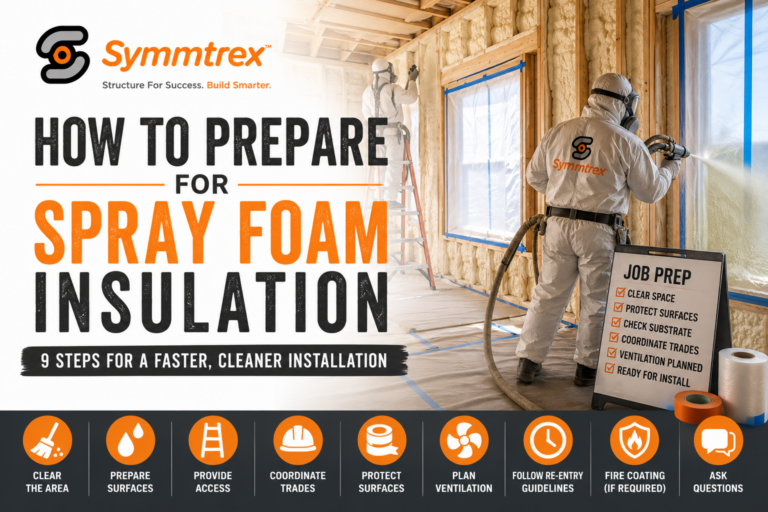
Whether you’re insulating a new home, upgrading a commercial property, or finishing a metal building, proper preparation is the key to a smooth and successful installation.
Before your spray foam contractor arrives, you’ll want to clear the work area, ensure surfaces are clean and dry, coordinate with other trades, and understand what to expect during and after installation.
This guide walks you through every step of spray foam job prep so your project stays on schedule and your insulation performs as intended.
Why Proper Spray Foam Job Prep Matters
Spray foam insulation is one of the most effective ways to improve energy efficiency, reduce air leaks, and increase indoor comfort. However, even the highest-quality materials perform best when installed under the right conditions. Properly installed insulation can support a more comfortable and energy-efficient building envelope.
Preparing your project before installation helps:
- Speed up the installation process
- Improve insulation performance
- Prevent overspray on finished surfaces
- Reduce scheduling delays
- Create a safer work environment
- Ensure your project is ready for any required fire protective coatings
Whether you’re working with a homeowner, builder, or commercial project manager, taking time to prepare can save time, money, and frustration.
Spray Foam Job Prep Checklist
Use this checklist before your installation day.
Clear the Work Area
Spray foam installers need room to work safely and efficiently.
Before installation, remove or relocate:
- Furniture
- Storage boxes
- Building materials
- Equipment
- Vehicles
- Personal belongings
For commercial projects, make sure other subcontractors have cleared the work area before installation begins.
A clean workspace allows for better coverage and helps keep your project on schedule.
Prepare the Substrate
Spray foam adheres best to clean, dry, stable surfaces.
Before installation:
✔ Remove dust and debris
✔ Repair damaged sheathing or framing
✔ Correct any roof leaks
✔ Eliminate standing water
✔ Address moisture issues
✔ Complete all framing work
If moisture or damaged materials are present, your contractor may need to postpone installation until conditions improve.
Spray foam installation guidelines from the Spray Polyurethane Foam Alliance covers substrate preparation, residential installation practices, metal-building applications, and thermal and ignition barriers.
Provide Safe Access
Your spray foam contractor will need access to every area receiving insulation.
This may include:
- Attics
- Crawl spaces
- Wall cavities
- Roof structures
- Mechanical rooms
- Metal buildings
If lifts, scaffolding, or special equipment are required, coordinate these in advance to avoid delays.
Coordinate With Other Trades
Proper scheduling is one of the most overlooked parts of spray foam job prep.
Spray foam installation should typically occur after:
- Framing
- Electrical rough-in
- Plumbing rough-in
- HVAC rough-in
- Required inspections
And before:
- Drywall
- Paint
- Interior finishes
- Flooring
- Trim work
Coordinating trades helps eliminate costly rework later. If your project also includes steel framing, coordinating insulation with framing installation helps keep the project moving efficiently.
Protect Finished Surfaces
Professional installers carefully mask surrounding areas, but identifying sensitive surfaces ahead of time makes the process even smoother.
Areas that often require protection include:
- Windows
- Doors
- Finished concrete
- Decorative steel
- Mechanical equipment
- Electrical panels
- Flooring
Proper masking minimizes cleanup and protects finished materials from overspray.
Plan for Ventilation During Installation
Ventilation plays an important role in the spray foam installation process.
Your contractor will use ventilation equipment and follow manufacturer recommendations while the foam cures.
Before installation, ask about:
- Ventilation procedures
- HVAC operation
- Occupancy requirements
- Temporary building access restrictions
Following these guidelines helps ensure a safe installation.
The U.S. Environmental Protection Agency provides additional spray polyurethane foam safety guidance for property owners and building professionals. EPA notes that spray application can generate chemical vapors and aerosols, which is why work-area restrictions, protective equipment, ventilation, and contractor instructions matter during installation.
Follow Re-Entry Guidelines
Every project is different, and re-entry recommendations can vary depending on the spray foam product, building conditions, and ventilation.
Before installation, ask your contractor:
- When can occupants safely return?
- When can pets re-enter the building?
- When can HVAC systems be restarted?
- When can other trades resume work?
Following your contractor’s recommendations helps ensure the foam has cured properly before normal occupancy resumes.
Does Your Project Need a Fire Protective Coating?
Many residential and commercial projects require an ignition barrier or thermal barrier over exposed spray foam insulation to meet applicable building codes. Applicable building codes may require spray foam to be separated from occupied areas by an approved thermal barrier or another tested assembly.
The International Building Code generally requires foam plastic insulation to be separated from a building’s interior by an approved thermal barrier, subject to stated exceptions and tested alternatives. Final requirements depend on the adopted local code and the specific assembly.
Depending on your project, this may include:
- Intumescent coatings
- Thermal barrier coatings
- Approved drywall assemblies
Requirements vary based on the building type, occupancy, and where the spray foam is installed.
If a fire protective coating is required, discuss it during the quoting process so it can be included in your project schedule and budget. If you’re still comparing insulation systems, you may also find our guide to commercial spray foam insulation helpful.
Questions to Ask Your Spray Foam Contractor
Before installation begins, make sure you understand the process.
Consider asking:
- Which type of spray foam is best for my project?
- What R-value will be installed?
- How long will installation take?
- What preparation is my responsibility?
- When can other trades return?
- Is cleanup included?
- Will a fire protective coating be required?
A quality contractor will be happy to answer these questions before work begins.
Common Mistakes to Avoid Before Spray Foam Installation
Many installation delays happen because of avoidable preparation issues.
Avoid these common mistakes:
- Scheduling spray foam before rough-in work is complete
- Leaving furniture or materials in the work area
- Applying spray foam over wet or damaged surfaces
- Failing to coordinate with other contractors
- Ignoring ventilation or re-entry recommendations
- Assuming fire protective coatings are automatically included in every project
Many preparation issues are easier to avoid when insulation planning begins early in the construction planning process. Taking care of these items ahead of time helps keep your project on schedule.
Why Choose Symmtrex for Spray Foam Insulation in North Texas?
Whether you’re insulating a custom home, commercial building, warehouse, or metal structure, choosing an experienced contractor makes all the difference. Our team also manufactures precision steel framing products that integrate seamlessly with high-performance building envelopes.
Symmtrex provides professional spray foam insulation services throughout North Texas with a focus on quality workmanship, clear communication, and dependable project scheduling.
Our team works closely with homeowners, builders, and general contractors to ensure every installation is completed safely, efficiently, and according to project specifications.
From your initial consultation through final installation, we’re committed to helping you maximize the performance of your building.
Ready to Prepare Your Project?
Proper preparation leads to better insulation performance, fewer project delays, and a smoother installation from start to finish.
If you’re planning a residential, commercial, or metal building project, Symmtrex is here to help.
Ready to improve your building’s energy performance? Request a Spray Foam Review today or explore our Spray Foam Insulation Services to learn more.
Related Resources
- Spray Foam Insulation for Steel Buildings in Texas Heat
https://symmtrex.com/spray-foam-insulation-for-steel-buildings-texas-heat-and-thermal-bridging/ - Commercial Spray Foam Insulation That Lowers Long-Term Building Costs
https://symmtrex.com/commercial-spray-foam-insulation/ - Steel vs. Wood Framing: Which Structure Fits Your Build Best?
https://symmtrex.com/steel-vs-wood-framing-comparison/ - Spray Foam Insulation Services
https://symmtrex.com/products/sprayfoam/